
The Myth of the Monolithic Breed
Breed labels are useful shorthand, but they are not complete behavioral descriptions. Guardians often expect a dog to behave like an illustrated breed standard: the retriever should eagerly retrieve, the herding dog should notice every movement, and the guardian breed should remain naturally reserved. When an individual does not match that expectation, the mismatch is sometimes treated as evidence of poor breeding, inadequate training, or a defective dog. In reality, breed describes a population history and a set of probabilities, not a guaranteed personality package.
The contrast between appearance and behavior explains much of the confusion. Artificial selection could make traits such as coat type, body size, ear carriage, and coloration relatively predictable because these characteristics are often influenced by a small number of genetic variants with substantial effects. Temperament is usually less tidy. It emerges from many genes, developmental processes, learning experiences, health status, and the context in which behavior is observed. The useful question is therefore not whether nature or nurture “caused” a behavior, but how inherited predispositions and environmental conditions interact to produce the dog in front of you.
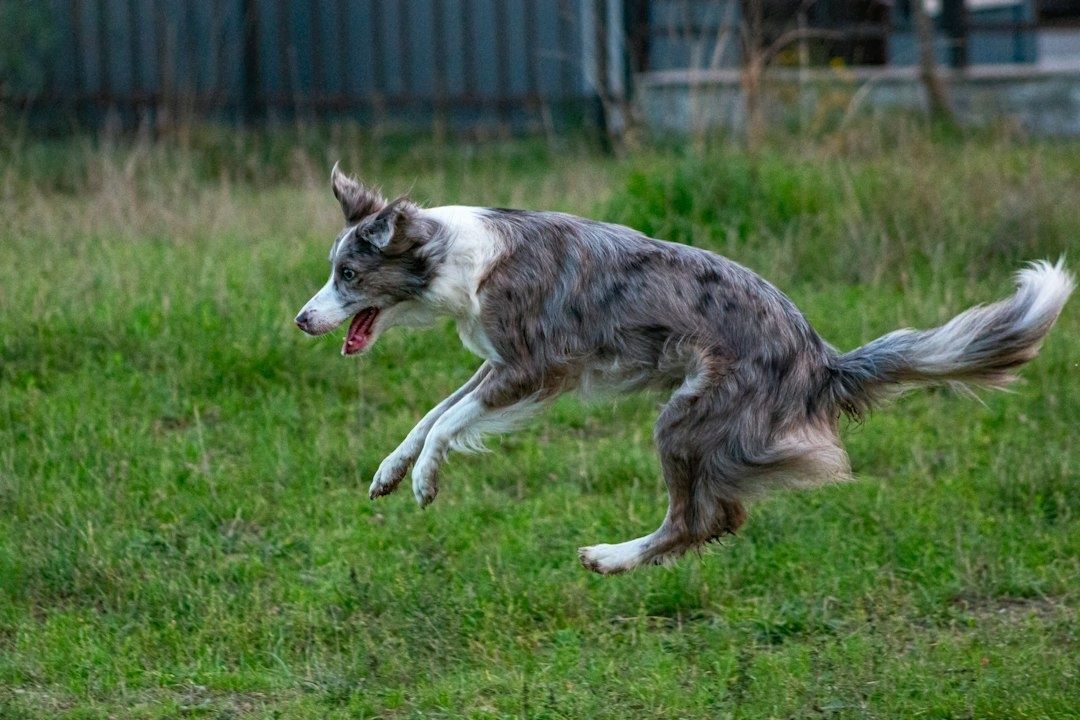
Genetics of Appearance Versus the Architecture of Behavior
Selective breeding can produce strikingly consistent physical forms without producing equally consistent minds. A mutation affecting coat length, pigment, hair texture, or a developmental pathway involved in ear structure may have a visible effect that is relatively easy to identify and select. Over generations, closed registries and strong selection can increase such variants until a breed becomes remarkably uniform for particular morphological features. This is one reason breed can predict coat color or general body shape far more reliably than it predicts an individual dog”s response to strangers, novel environments, or frustration.
Behavioral phenotypes are generally quantitative rather than categorical. Sociability, noise sensitivity, persistence, arousal, impulse control, and recovery from stress are influenced by numerous quantitative trait loci, with each region typically contributing a small effect. These effects can interact with one another and with developmental experience. A dog may inherit a lower threshold for startling, for example, but careful early exposure, predictable handling, and successful coping experiences can influence how that sensitivity appears in daily life. Conversely, pain, chronic stress, isolation, or repeated frightening events can amplify a predisposition that might otherwise remain subtle.
Research reviewed in canine genomic architecture research helps frame this distinction. Domestication and restricted gene flow created unusually diverse morphological and behavioral populations, while specialized breeding preserved some task-related tendencies. Yet the existence of breed-level tendencies does not mean that every member carries the same behavioral profile. A large study of more than 2,000 dog genomes and over 18,000 owner surveys found that breed explained approximately 9 percent of behavioral variation, while physical characteristics such as coat color were much more strongly predicted by breed. No behavior examined was exclusive to one breed.
- Physical traits: often show stronger effects from a limited number of variants and are easier to standardize.
- Behavioral traits: usually reflect many genes of small effect, developmental history, learning, and current context.
- Breed averages: can inform probability and management, but cannot replace assessment of the individual.
- Genetic influence: describes susceptibility or tendency, not an unavoidable behavioral outcome.
Why Two Purebred Littermates Can Show Completely Different Personalities
Two littermates share parents, breed background, and much of their early environment, but they do not share identical genomes or identical developmental experiences. Small genetic differences can influence sensory thresholds, reward sensitivity, persistence, or recovery after arousal. Even within one litter, individuals may receive different amounts of rest, handling, competition for maternal access, and exposure to novelty. Later, differences in household routine, health, training history, and social opportunities widen the divergence.
Large standardized owner assessments make this variation visible. The Canine Behavioral Assessment and Research Questionnaire, or C-BARQ, has allowed researchers to compare behavior across thousands of dogs using structured measures rather than informal labels. In a study of 1,975 registered Labrador Retrievers, researchers detected genetic variance for some traits, particularly fetching tendency and fear of loud noises, while other traits had very small heritability estimates. Genomic analyses supported a polygenic model in which many genomic regions contribute small effects. Readers can review the broader published evidence through this large-scale C-BARQ research record, while recognizing that access pages and individual studies should not be treated as proof that any single test predicts an entire personality.
| Feature | Morphological selection | Behavioral expression |
|---|---|---|
| Typical genetic architecture | Sometimes one or a few variants with substantial effects | Often many loci with small, interacting effects |
| Effect of breed history | Frequently strong and visually consistent | Variable, probabilistic, and trait specific |
| Role of environment | Usually limited for basic structure | Often substantial across development and adulthood |
| Best interpretation | Useful predictor of physical characteristics | Starting point for hypotheses, not a diagnosis |
Heritability also requires careful interpretation. A heritability estimate describes how much variation within a particular population and environment is associated with genetic differences. It does not indicate that a behavior is permanently fixed, nor does it transfer automatically from one breed or study population to another. A highly heritable trait can still be modified by management and learning, while a trait with modest heritability can be important in an individual dog. Breed ancestry may modestly predict certain tendencies, such as biddability, but age, sex, health, and experience may be more informative for a particular dog in a particular situation.
Environmental Buffers and Epigenetics Shaping Daily Temperament
Development begins before a puppy enters a new home. Maternal stress, nutrition, illness, and the prenatal environment can influence fetal development and later stress responsiveness. After birth, litter conditions, maternal care, handling, sleep, and exposure to ordinary household stimuli contribute to the developing nervous system. Early socialization is not simply exposure to as many people and dogs as possible. It is the gradual creation of safe, successful experiences, with enough distance and recovery time to prevent overwhelming the puppy.
Epigenetic mechanisms help explain how experience can alter gene expression without changing the underlying DNA sequence. These molecular processes may affect systems involved in stress regulation, learning, and neural development, although the practical meaning of specific epigenetic findings in pet dogs remains an evolving area of research. The broader behavioral genetics literature emphasizes that domestication, selection for tameness, and developmental conditions can interact in complex ways. Daily temperament is also influenced by physical state. Pain, gastrointestinal discomfort, orthopedic disease, endocrine problems, sensory decline, sleep disruption, and medication effects may present as irritability, avoidance, reduced tolerance, or apparent “aggression.”
- Evaluate sudden behavior change as a possible health signal, not merely a training failure.
- Protect sleep, predictable routines, and opportunities for withdrawal from social pressure.
- Use gradual exposure paired with choice and reinforcement during sensitive developmental periods.
- Record context, intensity, duration, and recovery instead of relying on labels such as “stubborn” or “dominant.”
A Practical Framework for Assessing the Individual Dog
Assessment should begin with observable function. Rather than asking whether a dog is “a typical member” of its breed, identify what the dog does, what precedes the behavior, what consequence follows, and how quickly the dog returns to baseline. A dog that barks at visitors may be fearful, frustrated, socially overexcited, guarding access to a valued space, or responding to pain. The outward behavior is not the diagnosis. Breed history can suggest questions, but direct observation determines which questions deserve attention.
A structured baseline is particularly valuable for trainers, behavior consultants, and breeders. Use repeated observations across settings, because a dog”s behavior in a quiet home may differ substantially from behavior at a clinic, training facility, or crowded park. Avoid deliberately provoking a reaction to “test” temperament. Ethical assessment prioritizes safety, choice, and low-stress observation.
- Describe the behavior precisely. Record posture, movement, vocalization, gaze, distance, and whether the dog approaches, retreats, freezes, or redirects.
- Identify triggers and thresholds. Note the person, animal, sound, object, distance, duration, and intensity associated with the response.
- Measure recovery. Record how long it takes for breathing, movement, attention, and food interest to return toward baseline.
- Check health and developmental factors. Arrange veterinary evaluation for new, escalating, painful, or contextually unusual behavior.
- Test learning history carefully. Determine which consequences have strengthened the behavior and which reinforcers the dog can use without increasing arousal.
- Adjust management before training. Increase distance, reduce rehearsal, improve predictability, and provide safe alternatives.
- Individualize enrichment. Match activities to the dog”s arousal curve, persistence, sensory preferences, and recovery capacity.
Enrichment should not be prescribed by breed label alone. One dog from a working lineage may benefit from scent work and structured problem solving, while another may become overstimulated by prolonged high-intensity play. A socially confident dog may enjoy carefully managed group activities; a noise-sensitive dog may need quiet exploration and controlled exposure. The relevant variables are motivation, arousal, frustration tolerance, and recovery, not whether an activity appears traditional for the breed.
Breeders can apply the same principle at a population level. Breed averages remain useful for preserving functional qualities, but responsible selection should include validated temperament information, health screening, family history, and attention to behavioral welfare. A single impressive performance or a convenient breed stereotype is not enough. Ethical breeding aims to reduce extreme fear, unstable reactivity, and poor coping while preserving behavioral versatility and physical health. For guardians, objective tracking replaces breed guilt with useful information: behavior becomes something to understand, manage, and support rather than a verdict on the dog.
Train the Dog in Front of You
The strongest scientific shift is from categorical prediction to individual assessment. Breed ancestry can offer a starting hypothesis about likely motivations or sensitivities, but it does not reveal the dog”s complete genetic profile, developmental history, medical status, or learning history. Genetics influence thresholds and probabilities; experience, health, context, and training shape how those tendencies are expressed. This framework explains why dogs from the same breed, and even the same litter, can differ substantially without making either dog abnormal.
Responsible guardianship means observing signals, protecting welfare, and choosing interventions that fit the individual. Track patterns rather than assigning blame, investigate medical contributors, use humane reinforcement-based training, and seek qualified professional help when fear, aggression, or distress exceeds ordinary management. For breeders, the lesson is equally clear: evaluate temperament as carefully as conformation and avoid treating breed reputation as a substitute for evidence. The most accurate description of any dog is not a label alone, but the interaction between inherited predispositions, development, health, environment, and the behavior observable today.