
The Molecular Mystery Behind Canine Affection
Domestic dogs are often described as animals that became tame simply because humans tolerated them around camps, fed them, or selected the least aggressive individuals. That account captures part of the process, but it does not explain one of the most distinctive features of dog behavior: the tendency to seek human attention, maintain eye contact, and recruit people when a problem becomes difficult. For a practical introduction to how inherited temperament interacts with daily behavior, research on canine hypersociability offers a more precise starting point.
The contrast with wolves is especially revealing. Even human-socialized wolves commonly remain focused on manipulating an object or solving a physical challenge, while many dogs quickly turn toward a nearby person. This is not evidence that dogs are less intelligent. It suggests that domestication altered the relative value of social information. Current evidence points to structural variation in a region of canine chromosome 6, including genes associated with human Williams-Beuren syndrome, as one contributor to this shift. The central idea is not that a single “friendliness gene” dictates every greeting, but that inherited changes helped reconfigure the thresholds and rewards governing canine social attention.
The Human Genetic Mirror in Williams Beuren Syndrome
Williams-Beuren syndrome, usually abbreviated WBS, is a human genetic condition associated with a microdeletion on chromosome 7q11.23. The deleted segment contains multiple genes, and the resulting phenotype is medically and behaviorally complex. Many affected individuals show distinctive cardiovascular and developmental features, but the social profile has attracted particular attention: unusually strong interest in other people, reduced social caution, intense eye contact, and a tendency toward indiscriminate friendliness. These traits are not identical in every person, and they should not be reduced to a simplistic stereotype. Nevertheless, WBS demonstrates that changes in a defined genomic region can influence social motivation and the processing of interpersonal cues.
Dogs do not have the same chromosome numbering system as humans, but the corresponding or syntenic region is located on canine chromosome 6. A study in a peer-reviewed canine genetics investigation examined structural variants in this region and compared the behavior of domestic dogs with that of human-socialized gray wolves. The results linked variation near GTF2I and GTF2IRD1, genes located within the WBS-associated region, with differences in human-directed social interest. Dogs spent more time gazing at people and remaining near them, while wolves devoted more effort to the puzzle itself.
The findings are important, but they require careful interpretation. The study involved a relatively small sample, and structural variants are not the same as a single mutation with a uniform effect. A structural variant may involve an insertion, deletion, duplication, or rearrangement that changes how genes are regulated. Its behavioral influence can depend on genetic background, developmental history, stress exposure, learning, and the particular social environment in which a dog grows up. The strongest conclusion is therefore that the WBS-related region is a plausible and meaningful contributor to canine hypersociability, not that it independently determines an individual dog”s personality.
- Human WBS: a chromosome 7q11.23 microdeletion associated with a distinctive social and developmental profile.
- Canine counterpart: a syntenic region on chromosome 6 containing related genes and regulatory sequences.
- Behavioral relevance: variants near GTF2I and GTF2IRD1 correlate with increased interest in human interaction.
- Practical meaning: inherited predisposition influences social thresholds, but experience and welfare still shape observable behavior.
Transposons and the Molecular Architecture of Chromosome 6
Retrotransposons are mobile genetic elements that can copy themselves and insert into new locations in the genome. Unlike a standard single-nucleotide change, which alters one DNA “letter,” a transposon insertion can affect a larger regulatory landscape. It may modify when a nearby gene is switched on, how strongly it is expressed, or how developmental signals are coordinated. In this sense, the relevant canine variants are better understood as molecular adjustments to gene regulation than as a simple on-off switch for friendliness.
The canine WBS-associated region contains structural variation that may have altered developmental pathways in the forebrain and connected neural systems. The exact cellular mechanisms remain an active research question, and available evidence does not justify claiming that transposons permanently rewired one isolated “social center.” Brain development involves distributed circuits, including systems that evaluate salience, reward, threat, memory, and social cues. A change in regulatory architecture could make human faces, voices, gestures, or proximity more rewarding and could lower the threshold at which a dog seeks social assistance.
That interpretation fits broader neurobiological evidence. A review in The Neurobiology of Behavior and Its Applicability for Animal Welfare emphasizes that behavior emerges from interacting brain systems, motivational states, sensory input, hormones, memory, and environmental incentives. Heightened sensitivity in oxytocin-related pathways may support social bonding and attention, but oxytocin is not simply a chemical equivalent of affection. Its effects depend on context and can influence social salience, attachment, and responses to familiar or unfamiliar individuals. A dog with strong social motivation still needs predictable boundaries, rest, and protection from overwhelming interaction.
| Feature | Wild wolves | Domestic dogs |
|---|---|---|
| Primary response to a difficult puzzle | More persistent object-directed effort | More frequent orientation toward humans |
| Social attention | Often more selective and context-dependent | Frequently directed toward people, especially familiar caregivers |
| Genomic context | Less exposure to domestication-related selection in the WBS-associated region | Structural variation near genes including GTF2I and GTF2IRD1 |
| Behavioral interpretation | Independent persistence may be strongly rewarded by ecology | Social recruitment and human proximity may carry greater incentive value |
The Unsolvable Task and the Drive for Eye Contact
One of the clearest demonstrations of the dog-wolf difference uses an unsolvable task. An animal receives a food reward from a container or puzzle, but the final stage has been designed so that the reward cannot be reached. In comparative testing, domestic dogs often investigate briefly and then look toward a human, whereas wolves tend to continue manipulating the object. This pattern was not merely a product of dogs being unable to understand the apparatus. In studies that tested similarly raised animals without a person present, wolves were more persistent and displayed a wider range of motor actions.
Looking back at a human can represent social intelligence. Dogs may have learned that people are useful partners, and they may have developed an efficient strategy for obtaining information or assistance. It can also reflect lower motivation for object-directed persistence, particularly when independent manipulation has historically been less rewarding than cooperation with humans. The behavior should not automatically be labeled learned helplessness. Learned helplessness involves a history of uncontrollable outcomes and broader reductions in effective action, while a socially motivated glance may occur in a confident, exploratory dog that readily resumes activity after a cue or change in the environment.
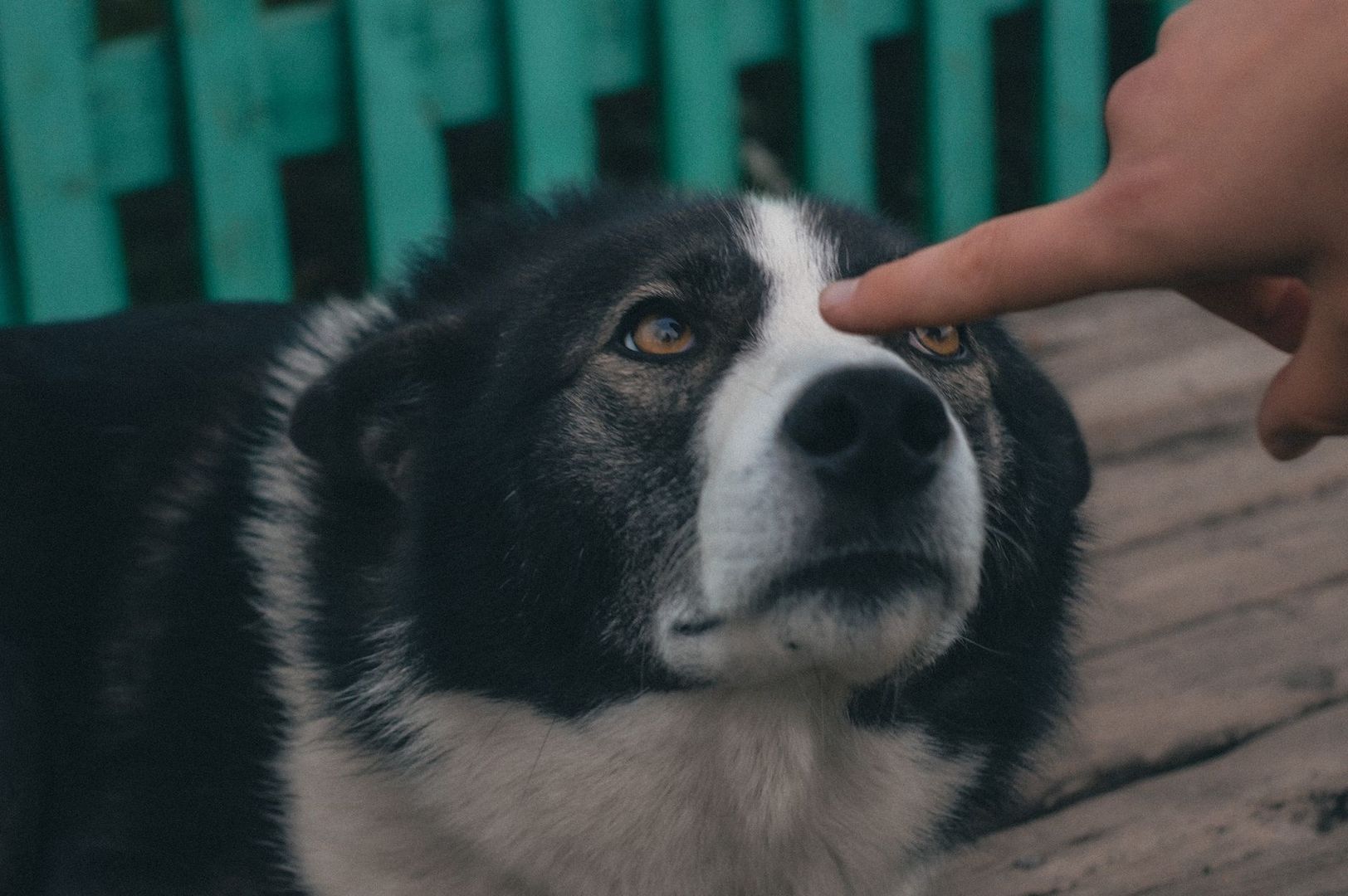
The most accurate interpretation is often dimensional. Some dogs look to people because they are socially engaged and flexible. Others do so because the task produces frustration, uncertainty, fear, or excessive arousal. The distinction matters because domestic dogs also show substantial breed-level neuroanatomical variation. MRI research involving 62 dogs from 33 breeds found distributed differences in brain organization that correlated with behavioral specializations such as scent work, sight hunting, guarding, and companionship. The findings support the view that selection for behavior can influence brain structure, while also showing why no single account applies equally to every breed or individual.
- Observe persistence: Does the dog try several strategies before seeking help?
- Measure recovery: After frustration, can the dog settle and re-engage?
- Assess social flexibility: Does the dog seek human contact only when useful, or continuously and indiscriminately?
- Check the broader pattern: Eye contact should be interpreted alongside posture, breathing, movement, appetite, and response to environmental change.
Distinguishing Hypersociability from Anxiety and Hyperarousal
Social motivation is not the same as emotional stability. A dog can be genetically inclined to seek people and still become anxious, impulsive, or overaroused in crowded settings. Conversely, a dog that rushes toward strangers may not be genuinely friendly. The approach could involve appeasement, conflict avoidance, frustration, fear, or a learned greeting ritual reinforced by attention. Behavioral interpretation must therefore begin with the dog”s complete emotional pattern rather than with the speed or enthusiasm of the approach.
Calm social engagement usually includes loose muscles, functional movement, the ability to pause, and a willingness to disengage without distress. A socially motivated dog may seek eye contact, lean toward a familiar person, or bring an object for interaction, then settle when the interaction ends. Hyperarousal often looks different: frantic locomotion, vocalization, inability to take food gently, repeated jumping, scanning, panting unrelated to heat, or rapid escalation when access to a person is blocked. Separation-related distress adds another layer, with panic signs appearing when a specific attachment figure leaves rather than simply a general desire for social contact.
Health and development must also be included in the assessment. Pain, gastrointestinal discomfort, sensory decline, sleep deprivation, medication effects, hormonal changes, and age-related cognitive changes can alter social behavior. The welfare literature stresses that psychological well-being depends on brain dynamics and motivated behavior, not merely on the presence of food, shelter, and physical safety. A dog may have abundant social contact and still experience poor welfare if interaction is unpredictable, coercive, or too intense.
- Establish the baseline: Record behavior during quiet periods, including resting posture, sleep, appetite, breathing, and ease of recovery.
- Identify the trigger: Note whether social behavior occurs with familiar people, strangers, departures, confinement, frustration, or specific sensory stimuli.
- Read the body: Evaluate muscle tension, tail carriage, facial expression, vocalization, movement quality, and ability to orient to food or learned cues.
- Test disengagement: Provide a calm interruption and observe whether the dog can pause, move away, settle, or redirect without escalating.
- Rule out medical contributors: Sudden or intense changes warrant veterinary evaluation before they are treated as temperament problems.
- Design support: Use predictable routines, gradual exposure, rest periods, enrichment, and reward-based training matched to the dog”s arousal threshold.
Translating Canine Genomics into Thoughtful Daily Care
Genetic findings make canine affection more understandable, not less individual. Dogs were shaped by selection for cooperation, scavenging, companionship, work, and human responsiveness, and the chromosome 6 region associated with WBS-like social traits appears to be part of that history. Yet genes influence probabilities and thresholds. They do not erase the effects of early socialization, attachment experiences, nutrition, sleep, pain, learning, household structure, or the quality of human interaction.
The practical responsibility is to meet a dog”s social needs without turning constant stimulation into a lifestyle. A genetically social dog should have reliable access to safe interaction, but also opportunities to rest, explore independently, chew, sniff, solve manageable problems, and learn that separation is predictable rather than threatening.
- Owners: Reward calm contact as well as active greetings, schedule decompression time, and teach disengagement cues.
- Trainers: Treat eye contact as information, not automatic obedience. Determine whether it reflects cooperation, frustration, fear, or overstimulation.
- Breeders: Evaluate stable temperament, recovery from stress, and social flexibility alongside sociability. Selection for extreme approach behavior alone may compromise welfare.
- Behavior professionals: Combine behavioral observation with medical screening, developmental history, environmental analysis, and individualized management.